Is $3,000 enough for a “real” engagement ring?
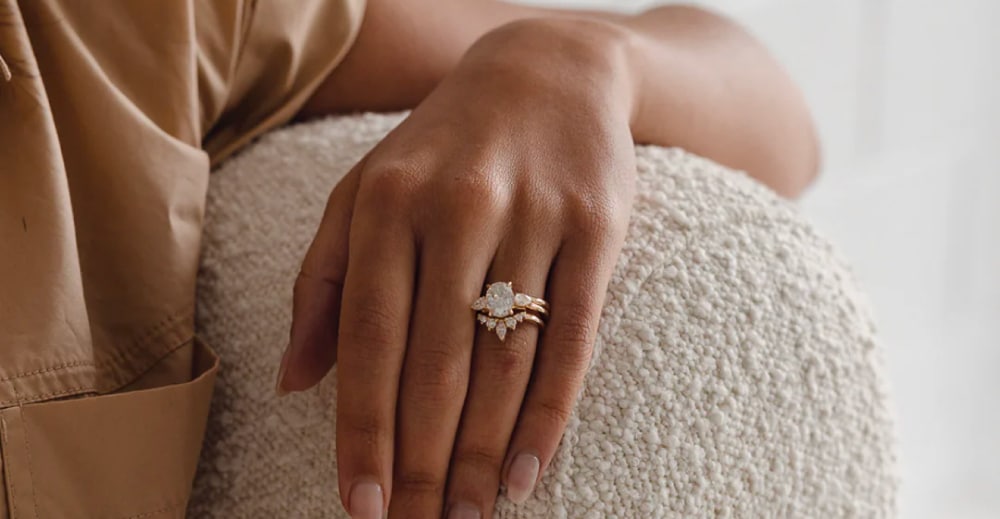
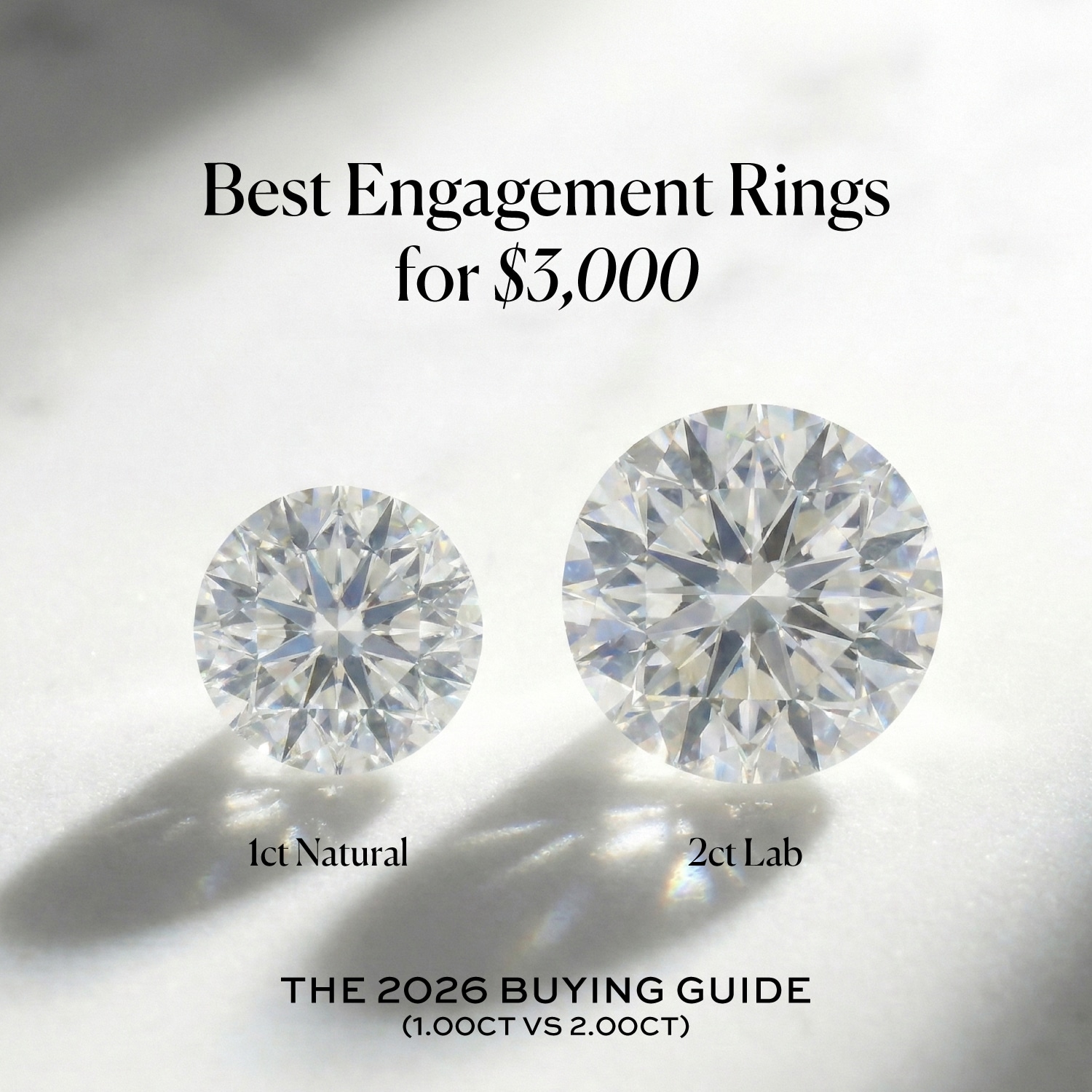
Yes. A $3,000 budget in 2026 is the strategic “Sweet Spot.” It reliably secures a high-quality 14K or 18K Gold Setting (~$600) paired with either a classic 1.00 Carat Natural Diamond (G-H Color, Excellent Cut) or a massive 2.30 – 3.00 Carat Lab-Grown Diamond (D-F Color, VS Clarity).
You do not need to spend more to hit the coveted 1-Carat benchmark. Stop letting sales clerks push you toward $6,000. They work on commission; I work on data.
I have analyzed the live 2026 inventory logs from major players like Blue Nile and James Allen, and I can tell you definitively: $3,000 is all you need to get a ring that matters.
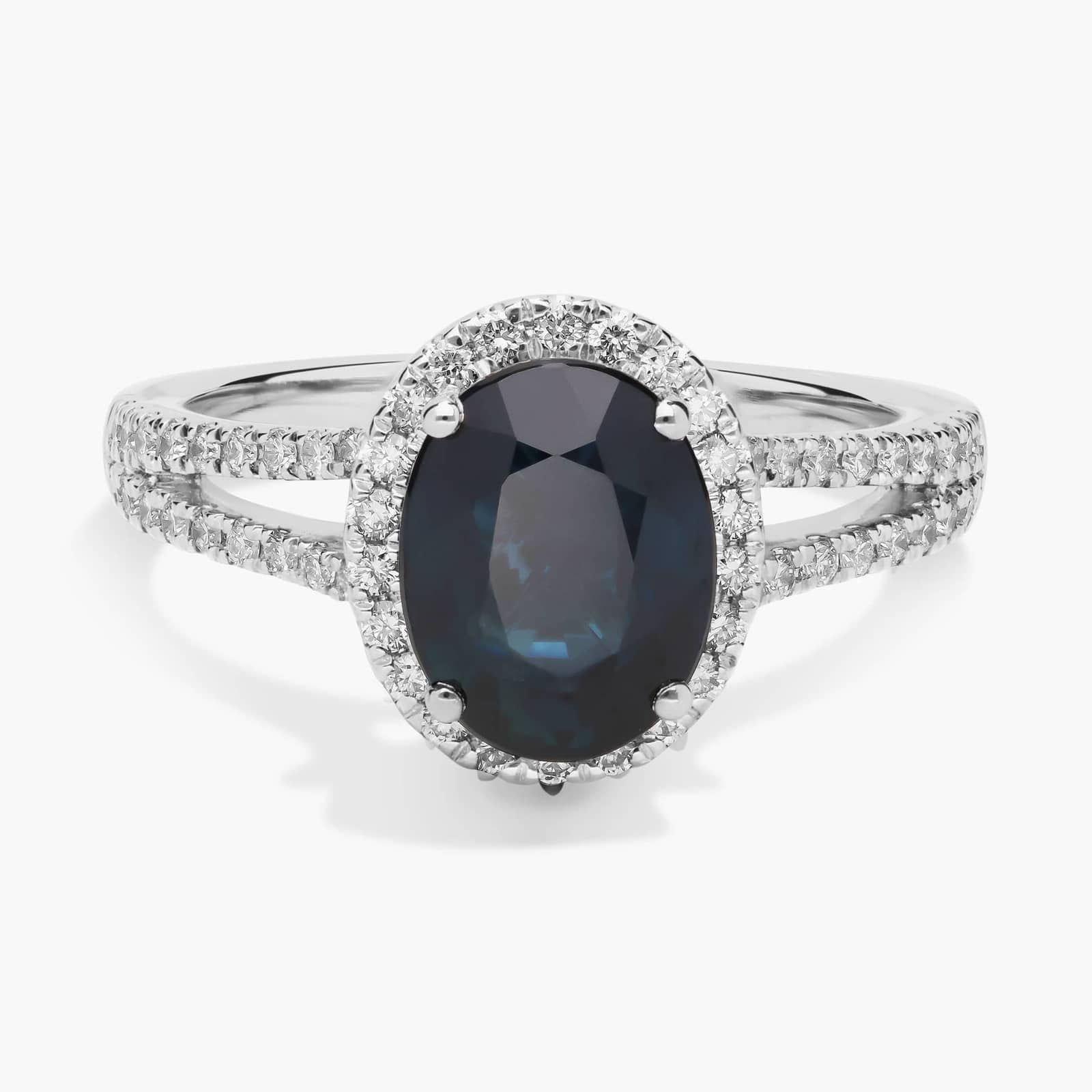
Deal Alert: Fast-Shipping Gifts — Up to 50% Off* fine jewelry at Blue Nile !
One In A Lifetime Sale: “Clear The Vault” – Get up to 70% OFF on select jewelry at Blue Nile !
Exclusive Offer: Flash Sale on James Allen Up to 40% Off * Sitewide engagement ring settings & Fine Jewelry at James Allen .
This specific number is the “Market Threshold.” Below it, you are often forced to compromise on a Natural diamond’s size (dropping below the psychological 0.90ct mark). Above it, you are often paying for incremental upgrades that the naked eye can barely see. At $3,000, you are in the driver’s seat.
You are standing at a fork in the road. You can afford a legitimate, top-tier stone in either category. The question is no longer “Can I afford a diamond?” The question is now philosophical: “Do I want History (Natural) or Physics (Lab)?”
I’m Mehedi, and I am going to show you the math behind the perfect $3,000 ring.
Diamond IQ Test: Natural or Lab-Grown?
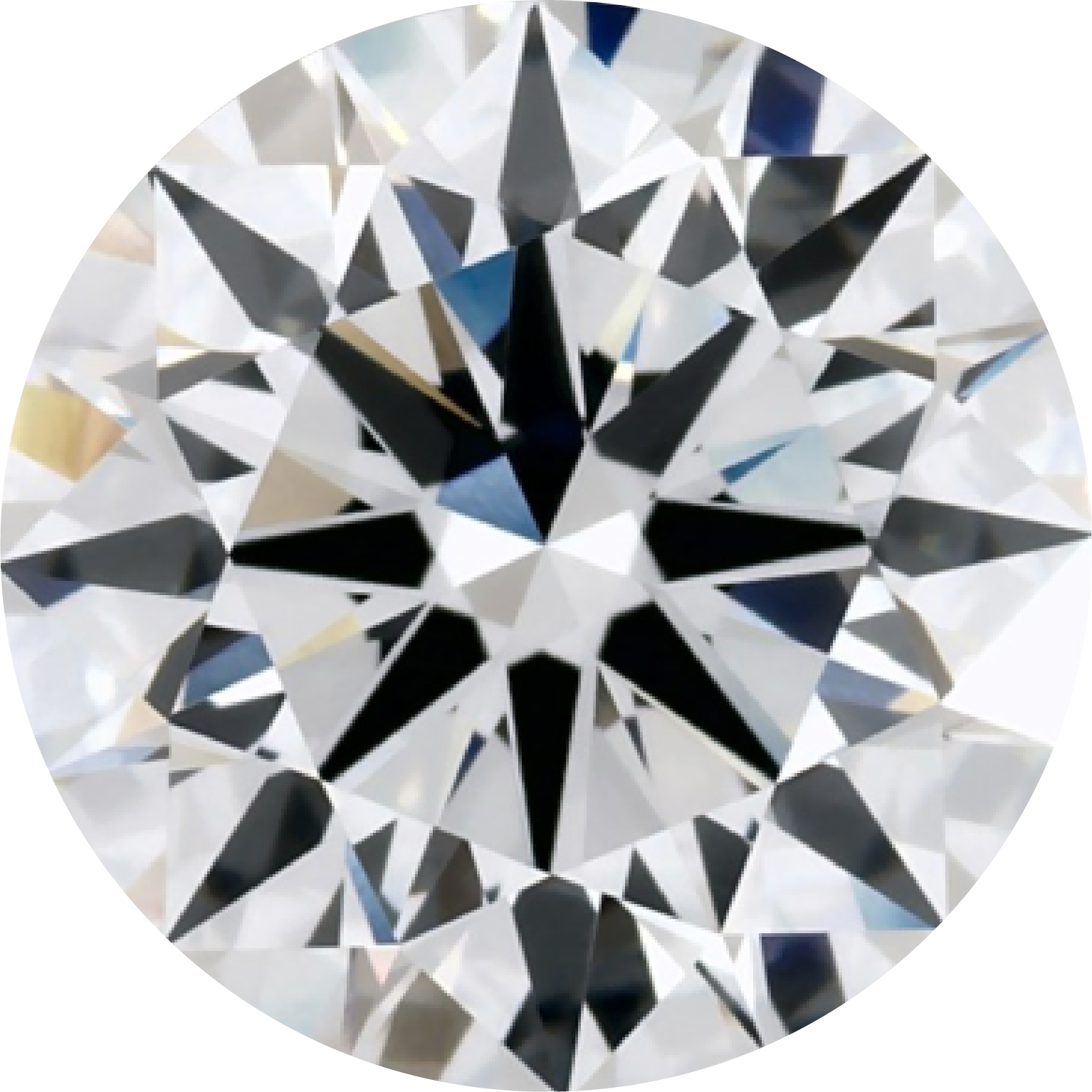
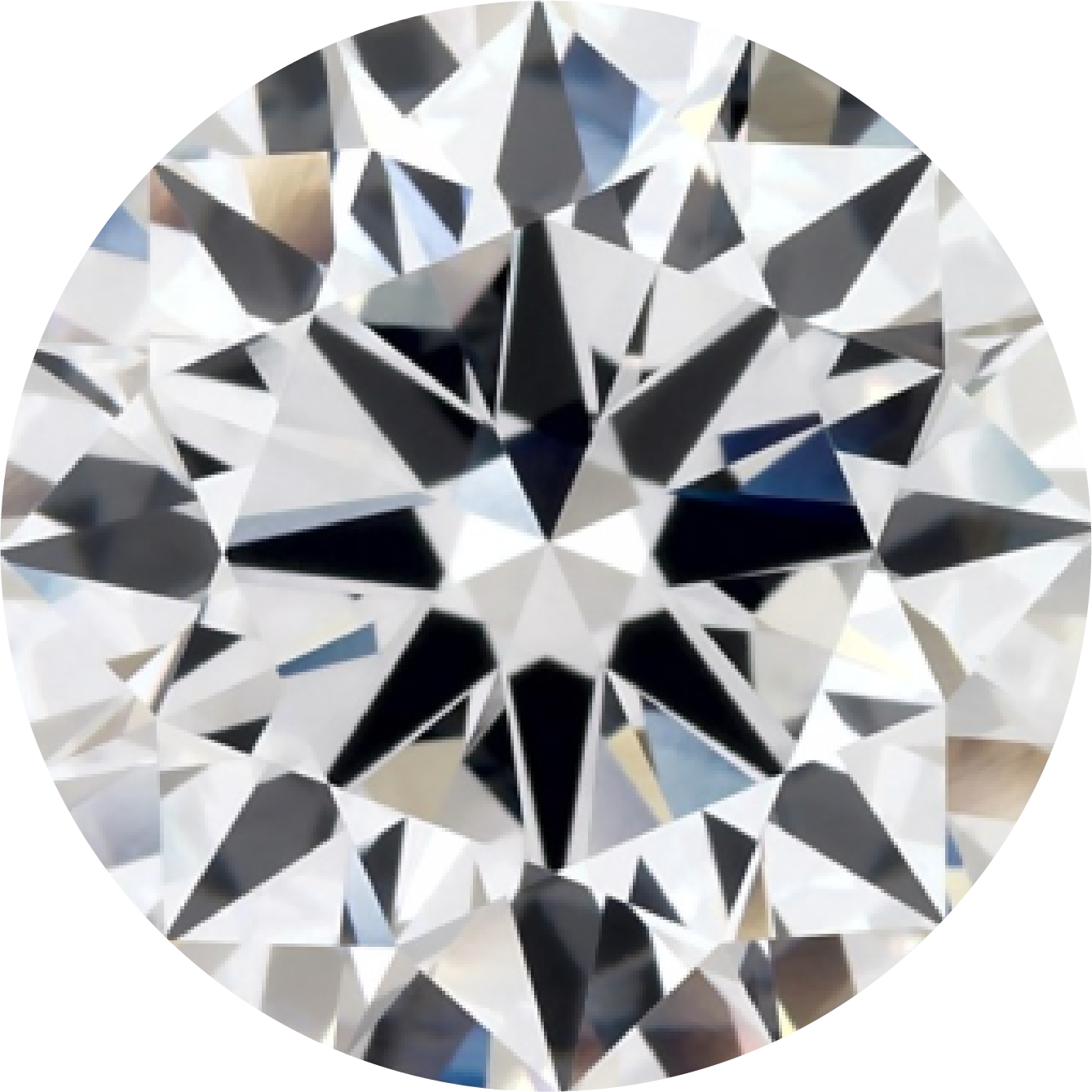
Two identical diamonds: GIA Certified, 1.51ct, D Color, VVS1, Ideal Cut. One is natural ($16,530), the other is lab-grown ($2,390). Choose the diamond you like better and see if you can match it to its origin.
The Rule of 80/20: Engineering the $3,000 Ring
To win at the $3,000 price point, you must follow one strict rule regarding your budget allocation: The 80/20 Rule.
Too many buyers walk into a store and let a salesperson talk them into a complex, swirling, designer band that costs $1,400.
This is financial suicide for your ring. If you spend 50% of your budget on the metal “Chassis,” you are left with only $1,500 for the “Engine” (the diamond). That forces you to buy a small, cloudy stone to fit into an expensive band.
The “Mehedi” Allocation:
- The Stone (80%): You devote $2,400 strictly to the diamond. This is the capital that gets you size and sparkle.
- The Setting (20%): You devote roughly $600 to the ring itself.
The Perfect $600 Chassis: Tapered Six Prong Solitaire
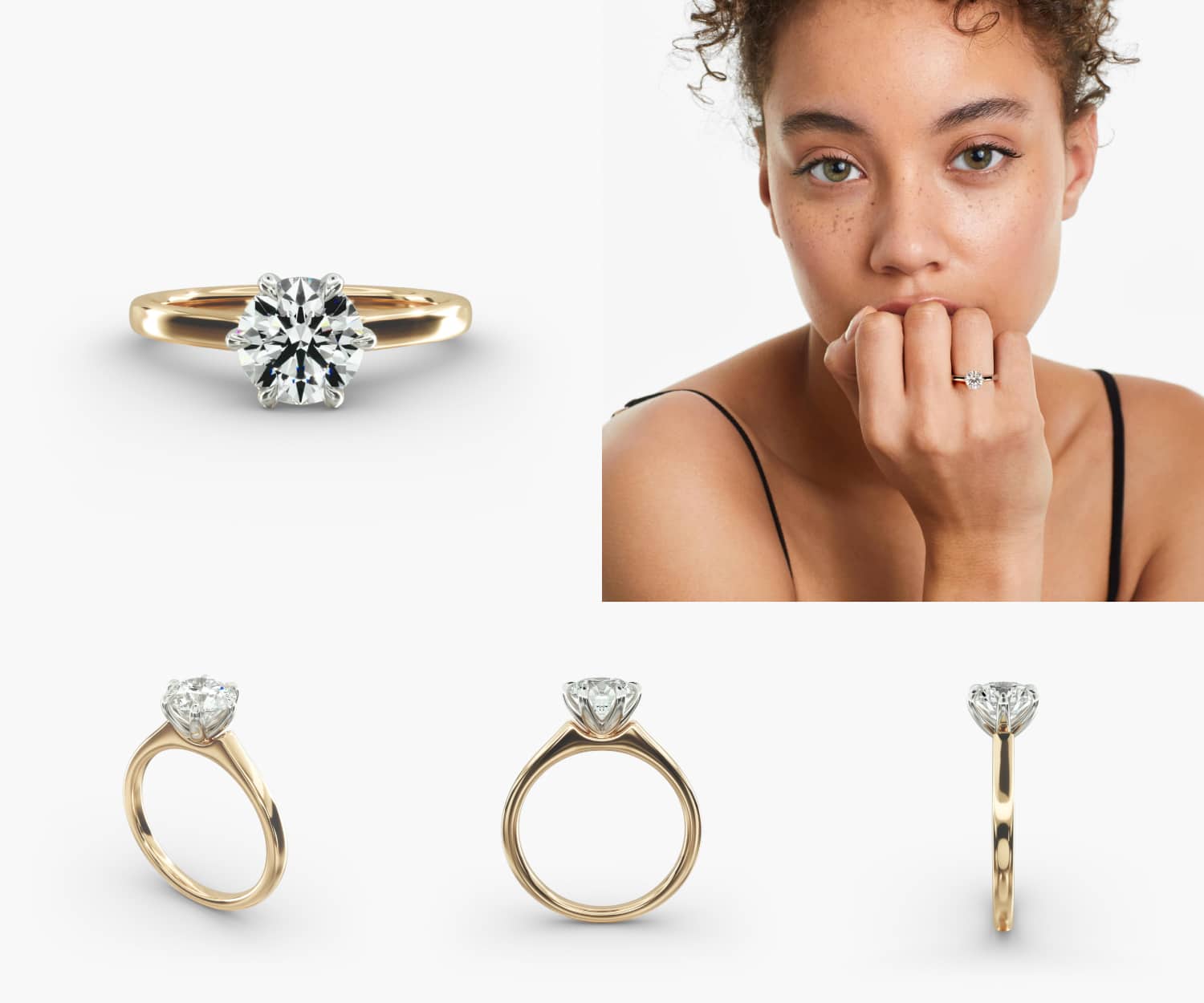
To prove this math works in the real world, I have selected a specific “Control Setting” for every diamond in this guide. We are using the Tapered Six Prong Solitaire Engagement Ring in 18K Yellow Gold.
Why I Chose This Ring:
While this ring technically has an MSRP of roughly $780, smart shoppers know that major retailers run rolling ‘25% Off’ sales that bring the actual price down to $585 for the majority of the shopping calendar.
The Strategic Advantages:
- Material Upgrade (18K): Getting 18K Solid Gold for under $600 is rare. Most sub-$600 rings are 14K. The higher purity gives it that rich, intense yellow color that defines the current vintage/gold trend.
- The Taper: The band gets thinner (tapers) as it approaches the stone. This is an optical trick—less metal near the diamond makes the diamond look bigger by comparison.
- Security (6 Prongs): We are planning to put a massive stone in this ring (potentially 3.00 Carats). A standard 4-prong head might leave it vulnerable. A 6-Prong “Tiffany-style” head locks that stone down like a fortress and makes the diamond look rounder.
The Result: After paying $585 for the setting, you have exactly $2,415 left. Now, let’s see what kind of damage we can do with that cash.
Budget Tip: Want to see other high-value mountings that fit this tier? Check my list of engagement ring settings under $600.
Option A: The “Real Deal” Natural (1.00 – 1.20 Carat)
This is the part of the guide where the skeptics usually roll their eyes. There is a prevalent myth in the jewelry industry, perpetuated by high-margin retailers, that says: “If you spend less than $6,000 on a 1-Carat natural diamond, it will look like crushed ice and frozen spit.”
That is absolute nonsense.
As your friend in the trade, I am here to tell you that the $2,400 – $2,500 price point (our allocated “Stone Budget”) is the magical floor for High-Performance Value. It is the exact financial line where “Commercial Junk” ends and “Respectable Luxury” begins.
At $2,415 (our remaining budget), you do not have to settle for 0.70 carats. You do not have to buy a cloudy stone. My analysis of the 2026 inventory proves that you can secure a GIA Certified, Excellent Cut, 1.00+ Carat Natural Diamond. You just have to know how to navigate the 4Cs to find the “Hidden Gems” that snobs overlook.
What a $2,400 Natural Diamond Actually Looks Like
So, what are we buying? We are buying the “Smart Classic” Specification.
To hit the 1.00ct mark for under $2,500, we generally look for:
- Color: G, H, or I. (Near Colorless).
- Clarity: SI1 or VS2. (Slightly Included, but often Eye-Clean).
- Cut: Excellent/Ideal. (The non-negotiable factor that makes it sparkle).
By dropping from a “VVS” clarity (microscope perfect) to an “SI1” clarity (naked-eye acceptable), you save roughly $3,000. That savings allows you to afford the 1.00ct size.
Let’s look at the hard data. I have pulled the live inventory to show you exactly what stones are sitting in the vaults right now waiting for a $2,400 offer.
Inventory Analysis: The Natural “Value” List
These aren’t hypothetical numbers. These are specific stones listed in the current market, often reflecting the “Wire Price” or promotional pricing (which smart buyers always use).
The Round Brilliant Winners (The Classic)
Rounds are the most expensive shape per carat. Yet, even here, we are cracking the 1.00ct barrier.
| Certificate | Carat Weight | Color / Clarity | Cut Grade | Market Price | Mehedi’s Verdict |
|---|---|---|---|---|---|
| GIA | 1.01 ct | H Color / SI1 | Excellent | ~$2,400 | The Benchmark. H Color faces up white in our Yellow Gold settings. Excellent Cut guarantees fire. This is the definition of a great buy. |
| IGI | 1.00 ct | H Color / SI1 | Excellent | ~$2,410 | The Alternate. IGI grades slightly looser than GIA, but for $2,410, a full carat round is a steal. Good for tight budgets. |
| GIA | 1.07 ct | H Color / SI1 | Excellent | ~$2,430 | The Size Hack. Gaining 0.07ct for just $30 more is massive visual value. A smart pick for maximizing diameter on the finger. |
| IGI | 1.01 ct | F Color / SI1 | Excellent | ~$2,440 | The Color Upgrade. F Color is “Colorless.” If you want icy white for under $2,500, this is the stone. Pair with White Gold. |
| GIA | 1.02 ct | H Color / SI1 | Excellent | ~$2,450 | Consistent Value. Similar to the first option, just slightly heavier. A reliable GIA certified option. |
| The 2026 Buying Verdict: For the best visual value, the 1.07ct GIA Size Hack is the winner. It offers the most surface area for your dollar. Remember to use James Allen’s 40x Super Zoom to ensure the SI1 inclusions are not visible to the naked eye. | |||||
The Princess Cut Opportunities (The Sharp Choice)
Princess cuts retain more crystal weight during cutting, which makes them cheaper. Look what happens to the quality here:
| Certificate | Carat Weight | Color / Clarity | Cut Grade | Market Price | Mehedi’s Verdict |
|---|---|---|---|---|---|
| GIA | 1.00 ct | F Color / SI1 | Ideal | ~$2,400 | High Color. F Color looks stark white. Square shapes hide inclusions well in the center, making SI1 a safe bet. |
| IGI | 1.03 ct | H Color / VVS1 | Excellent | ~$2,410 | CLARITY KING. Finding a VVS1 (Microscope Flawless) natural diamond over 1ct for $2,400 is insane. This deal exists only because it’s a Princess cut. |
| GIA | 1.20 ct | H Color / SI1 | Ideal | ~$2,420 | SIZE KING. Moving to Princess allows you to hit 1.20 Carats. This will look massive compared to a 1.00ct Round. Ideal for maximizing finger coverage. |
| GIA | 1.01 ct | H Color / VS2 | Ideal | ~$2,410 | The Sweet Spot. H/VS2 is perfectly safe. Cleaner than SI1, cheaper than VVS. The balanced choice for everyday durability. |
| The 2026 Buying Verdict: If you love modern angles, the 1.20ct GIA Option is the clear winner for size. However, if you are a perfectionist, the 1.03ct VVS1 Option offers collector-level purity at an entry-level price. | |||||
The Fancy Shape Deals (Cushion, Oval, Emerald)
Fancy shapes offer distinct character and often trade at a discount to rounds, allowing for better specs.
| Certificate | Shape | Carat | Color / Clarity | Price | Mehedi’s Verdict |
|---|---|---|---|---|---|
| GIA | Cushion | 1.00 ct | H / VVS2 | ~$2,400 | The Purity Play. If she loves the soft “pillow” look, getting VVS purity for this price is a huge win over a standard Round cut. |
| GIA | Cushion | 1.04 ct | G / VVS2 | ~$2,400 | The Upgrade. Notice the bump to G Color (Near Colorless) while maintaining VVS Clarity. This offers higher specs than the rounds above for the same money. |
| IGI | Emerald | 1.00 ct | H / IF (Flawless) | ~$2,490 | Collector’s Gem. Internally Flawless (IF). Step cuts are like mirrors, so clarity is critical. Finding an IF stone under $2.5k is exceptionally rare. |
| GIA | Oval | 1.02 ct | H / VS2 | ~$2,500 | The Trend. Oval cuts face up larger than Cushions. VS2 is the perfect “safe” clarity grade to keep the price down while ensuring it looks clean. |
| The 2026 Buying Verdict: The 1.00ct Emerald Cut (IF) is the technical winner here. Getting a Flawless diamond for under $2,500 is a “bragging rights” purchase that holds unique appeal for purists. | |||||
Analysis: How We Engineered This
Look at that data closely. The “common knowledge” says you can’t buy a nice 1-Carat Natural Diamond for $2,400. The data table above proves that is a lie.
Here is the “Secret Formula” these listings utilize to hit that price point:
- The “H-Color” in Yellow Gold Trick:
Most of the high-value Round stones listed above are H Color or I Color. In a Platinum setting, these might show a very faint warmth. BUT… remember our Engagement Ring Setting Under $600 choice? It is 18K Yellow Gold.- The Physics: The yellow metal reflects warmth into the diamond anyway. Putting a $10,000 “D Color” diamond in a yellow gold ring is a waste of money because it will look like an “H” instantly.
- The Win: By purposely buying an H-Color stone for our Yellow Gold setting, we aren’t losing any visual performance, but we are saving 30% on the price.
- The Physics: The yellow metal reflects warmth into the diamond anyway. Putting a $10,000 “D Color” diamond in a yellow gold ring is a waste of money because it will look like an “H” instantly.
- The “GIA SI1” Safety Net:
Many of these stones are SI1 (Slightly Included). Amateurs run from SI1 because they fear black spots. Experts hunt for SI1.- The Hunt: A “Good” SI1 has inclusions on the edge of the diamond (prong-able). A “Bad” SI1 has a black spot in the center (visible).
- The Opportunity: Since these listings are from top-tier vendors like James Allen/Blue Nile, you can use their 360-degree cameras to verify the inclusion is on the side. If you find an “Eye-Clean” SI1, you effectively get the look of a VS1 diamond for $1,500 less.
- The Hunt: A “Good” SI1 has inclusions on the edge of the diamond (prong-able). A “Bad” SI1 has a black spot in the center (visible).
- The “Inventory Efficiency”:
Notice the 1.07 Carat stone listed for $2,430? That is an odd number.
Usually, prices jump at 1.00 and 1.50. A stone like 1.07 is a “yield victory.” The cutter managed to save extra weight. These “off-size” stones often sit on the market slightly longer because people search for “1.00” exactly. Buying an odd-weight (1.07, 1.13) is a great way to snag extra value.
Expert Insight: Which Shape Wins at $2,400?
If I were spending your money on a Natural Diamond:
- For Perfectionists: I would buy the 1.04 ct Cushion G-VVS2. Getting “G” Color and “VVS2” Clarity for $2,400 is objectively incredible value. Cushions sparkle beautifully and the high stats ensure it looks crystal clear.
- For Size Seekers: I would buy the 1.20 ct Princess H-SI1. Gaining that extra 20% in weight (1.20ct vs 1.00ct) makes the ring feel significantly heavier and more expensive, for just an extra $20.
Mehedi’s Reality Check:
Does a $2,400 natural diamond look like a $20,000 one? No.
Does it look like a respectable, sparkling, authentic, 1-Carat heirloom? Absolutely.
If having a diamond that came from the Earth is important to your partner’s story, these listings prove you do not need to take out a loan to make it happen.
Want to see more 1.00ct natural options? Check my deep dive guide: natural diamond engagement ring under 3000.
But… what if 1.00 Carat isn’t enough?
What if you want your ring to stop traffic?
Then you need to turn the page to Option B: The Lab-Grown Revolution, where our $2,400 budget stops being “Sensible” and starts being “Wild.”
Option B: Lab Diamonds at $2,400: Entering “Best Mode”
This is where the math stops being “fair” and starts being fun.
If you are willing to embrace lab grown diamond bracelets technology for your ring, your $2,400 doesn’t just buy you a diamond. It buys you a “Super Stone.”
In the gaming world, “God Mode” is a cheat code where you have unlimited resources and no weaknesses. In the diamond world, a $2,400 Lab-Grown Budget is exactly that.
- Color? We don’t settle for “H”. We get D (Colorless).
- Clarity? We don’t settle for “Eye Clean”. We get VVS/VS1 (Microscope Clean).
- Cut? We don’t settle for “Very Good”. We get Ideal / True Hearts.
- Size? We don’t struggle to hit 1.00ct. We sail past 2.20 – 2.50 Carats.
You are getting a stone that is geometrically 300% larger than the natural alternative and optically superior in every metric, all for the price of a weekend vacation.
The Inventory: “Perfect” Specs for $2,400
The inventory data for 2026 is stunning. Here is what is currently available on the market for your budget. Note the jump in specs. We are no longer looking at “H” or “SI1.” Everything here is Colorless and Ideal.
| Diamond Shape | Carat Weight | Color / Clarity | Cut Grade | Price | Mehedi’s Impact Score |
|---|---|---|---|---|---|
| Round | 2.19 ct (GIA) | D – VS1 | Excellent | $2,400 | 11/10. It is rare to see GIA-graded Lab stones of this quality. “D” color is chemically pure white. This is a spotlight on the hand. |
| Princess | 2.05 ct (GIA) | E – VS1 | Ideal | $2,400 | 9.5/10. Breaking 2 carats in a square cut creates a massive “Face-Up” surface. The Ideal cut prevents light leakage in the corners. |
| Octagon | 2.01 ct (IGI) | F – VS1 | True Hearts | $2,410 | 10/10. “Octagon” here refers to a specialty Hearts & Arrows cut. It is engineered for maximum light return. Rare and distinctive. |
| Asscher | 2.00 ct (IGI) | D – VS2 | Ideal | $2,410 | 9/10. Step cuts usually hide weight, but at 2.00ct, the “Hall of Mirrors” effect is mesmerizing. “D” color is critical for Asschers, and this has it. |
| Pear | 2.03 ct (GIA) | E – VS1 | Ideal | $2,400 | 10/10. Over 2 carats, Pear shapes look enormous due to their length. Ideally matched with our Tapered Setting. |
| The 2026 Lab Verdict: If you want the most chemically pure stone, the 2.19ct Round D-VS1 is unbeatable. However, for sheer uniqueness, the True Hearts Octagon is a conversation starter that outperforms almost any standard cut in sparkle. | |||||
Mehedi’s Buying Rule: “D-Color or Bust”
If you are spending $80,000 on a natural diamond, you compromise on Color to get Size.
If you are spending $2,400 on a lab diamond, do not compromise.
As you can see from the 2 carat lab diamond under 3000 listing data, D and E color stones are standard at this price point.
- The Trap: Some jewelers still try to sell “G” or “H” color lab diamonds for this price. Don’t buy them. The production cost difference between growing a ‘G’ stone and a ‘D’ stone is minimal today.
- The Tip: At 2.00+ carats, diamonds hold body color more noticeably. A natural ‘J’ color might look nice in a vintage way, but a Lab ‘J’ color looks like a mistake. Stick to the D-E-F (Colorless) range because you can afford it.
The Special Find: “Octagon” & “True Hearts”
Look at the Octagon / True Hearts listing for $2,410. This is a prime example of where your money goes further in Lab.
“True Hearts” (or Hearts & Arrows) refers to optical symmetry so perfect that it creates a kaleidoscope pattern of 8 hearts and 8 arrows when viewed through a special scope. In the Natural market, a stone cut to this precision carries a 30% “Super Ideal” price premium.
In the Lab market, you can snag this 2.01 Carat High-Performance Cut for effectively the same price as a standard cut. This is the definition of “Smart Shopping.”
Conclusion on Option B:
If you want your ring to look like it cost $25,000, buy the GIA 2.19ct D-VS1 Round.
The stone is cleaner, whiter, and three times heavier than Option A. Just be prepared to tell everyone “It’s Lab” or smile comfortably when they assume you won the lottery.
Want to see exactly how big 2 carats looks? Check the sizing charts in: 2 carat lab diamond under 3000.
Comparison: The Visual Reality ($2,400 Stone)
Just to drive this home—here is the physical difference sitting on your finger for the exact same spend.
| Feature | The “Value” Natural Diamond | The “God Mode” Lab Diamond |
|---|---|---|
| Visual Width | ~6.4 mm (Modest) | ~8.3 mm (Statement) |
| Finger Coverage | Covers ~35% of finger width. | Covers ~55% of finger width. |
| Whiteness | Near Colorless (H/I) | Colorless (D/E) |
| Sparkle Type | Classic Fire | Modern Precision (Ideal) |
| Mehedi’s Recommendation | Buy if you value Legacy. | Buy if you value Impact. |
| The 2026 Buying Verdict: The “God Mode” diamond is not just bigger; it is cleaner, whiter, and cut with higher precision. If your goal is to maximize the “wow factor” when you open the box, the Lab Diamond is the mathematically superior choice. See our Side-by-Side Visual Guide for proof. | ||
Which one fits her personality?
If she wants a “Rock,” Option B wins mathematically every time.
If she wants a “Treasure,” Option A holds the history.
Best Shapes for the $3,000 Budget
Your budget is fixed at $3,000, but the size of your ring is not. By simply changing the shape of the diamond, you can make a 1.00ct stone look like a 1.50ct stone without spending a penny more.
In 2026, we categorize shapes into two buckets: “Asset Heavy” (Compact shapes like Round) and “Surface Heavy” (Elongated shapes like Oval/Pear).
1. Round Brilliant (The Classic “Safe Bet”)
Rounds are the benchmark. However, they are visually the smallest shape for their carat weight because much of the stone’s weight is hidden in the cone (depth) to maximize sparkle.
- Budget Impact: At $2,400 (our stone budget), you are hitting exactly 1.01 Carats (Natural). It will look beautiful and standard (~6.5mm wide).
- The Verdict: Buy Round if her priority is Sparkle. Nothing out-sparkles a round.
2. Elongated Shapes (Oval, Pear, Marquise)
These are the “Visual Hacks.”
- Oval: A 1.00ct Oval looks significantly larger than a 1.00ct Round because it stretches vertically down the finger.
- Natural Option: GIA 1.02 ct H-VS2 Ideal Oval ($2,500). Notice you can get VS2 quality for the same price. The 8.0mm length of the oval makes it feel closer to a 1.50ct Round in “finger coverage.”
- Natural Option: GIA 1.02 ct H-VS2 Ideal Oval ($2,500). Notice you can get VS2 quality for the same price. The 8.0mm length of the oval makes it feel closer to a 1.50ct Round in “finger coverage.”
- Pear: The teardrop shape offers the most dramatic length.
- Lab Option: GIA 2.03 ct E-VS1 Pear ($2,400). This stone is a monster. A 2.00ct Pear measures nearly 11mm long. It will reach from knuckle to knuckle, maximizing the visual value of your budget.
3. Unique Finds: The “True Hearts” Octagon
Sometimes the best value isn’t about size; it’s about engineering.
During my inventory search, I found a unicorn: The IGI 2.01 Carat F-VS1 True Hearts Octagon.
- Why It Matters: “Octagon” refers to a proprietary cut designed to fuse the clean lines of an Emerald Cut with the insane sparkle of a Round Brilliant.
- The Win: Finding a specialized, high-performance cut like this in the budget bin (~$2,410) proves that you don’t need to stick to boring shapes to stay on budget. It’s a conversation starter.
Data Tip: To see exactly how many millimeters you gain by switching shapes, use my visual comparison chart in what shape diamond looks the largest.
Best Places to Spend Your $3,000
We have the math: $2,400 for the Stone and $600 for the Setting.
Now, where do you actually execute this? Not every retailer offers high-quality settings in that price range, and not every retailer stocks 2,000+ loose diamonds fitting our specific “Value” specs (1.01ct Natural / 2.05ct Lab).
Here is my breakdown of the top platforms based on who actually wins at the $3,000 price tier.
1. James Allen: The $3,000 Category King
The Verdict: The absolute winner for this specific budget because of one thing: The $585 Setting.
As detailed in Phase 1, our strategy hinges on the Tapered Six Prong Solitaire ($585). James Allen stocks this specific high-value chassis. Without it, you are spending $900+ elsewhere, eating into your diamond money.
- The Inspection Edge: Since we are hunting for SI1 Natural Diamonds (to hit 1.00ct), you must use James Allen’s 360° Diamond Display Tech. You cannot buy an SI1 blind; you need to spin it to ensure the inclusion is hidden.
- The Certs: They list the specific GIA 1.01ct natural stones we identified in our data scrape.
- Safety Check: Wondering about their shipping or packaging? Read my deep dive: James Allen review.
2. Blue Nile: The “Speed & Spec” Runner-Up
The Verdict: The best alternative for ready-to-ship Lab Diamonds.
Blue Nile competes aggressively on the Lab-Grown front. Their inventory of GIA-Graded Lab Stones in the 2.20ct – 2.50ct range often includes specific “Astor Ideal” cuts that guarantee sparkle performance.
- The Setting Limit: Their solitaires typically start slightly higher (~$700 range) compared to James Allen’s sales, pushing the budget tighter.
- The Inventory: Massive. If you can’t find the stone on JA, Blue Nile is the immediate next stop.
- Head-to-Head: How do they compare on returns and warranties? Ritani vs Blue Nile.
3. Rare Carat & Ritani: The Wholesale Discounters
The Verdict: Great for finding the loose stone, trickier for the full ring experience.
If you are comfortable buying the diamond loose and taking it to a local bench jeweler to be set, Ritani and Rare Carat are powerful tools.
- Ritani: Their “Transparent Pricing” shows you the exact markup. You can often snag a loose 1.05ct Natural Diamond for $50-$100 less than the giants, simply because they operate on thinner margins. Check out: Is Ritani legit?.
- Rare Carat: The aggregator model is perfect if you are looking for a “Unicorn” (like that Octagon cut mentioned in the data). Use them to scan the market for odd shapes. Rare Carat reviews legit.
4. VRAI: The Sustainable Niche
If the Lab-Grown Option B appealed to you but you demand “Zero Carbon” footprint (hydro-powered growth), VRAI is the move. Their cuts are proprietary and premium.
However, their setting prices are often higher ($1,000+), which might break our strict $3,000 cap unless you compromise on the stone size. VRAI vs Blue Nile.
Summary: Retailer Scorecard ($3,000 Budget Edition)
| Feature | James Allen | Blue Nile | Ritani | Rare Carat |
|---|---|---|---|---|
| Settings Under $600 | Best Inventory. Thousands of high-quality designs. | Moderate. Strong classic options. | Basic / Industrial. Often feels less refined. | Varies. Dependent on the local jeweler vendor. |
| Natural 1ct+ Options | High. Visual check is mandatory but tech is great. | High. Reliable standard videos for almost all stock. | High Risk. Cheaper prices, but visual inspection is inconsistent. | High Aggregation. Pulls from thousands of dealers. |
| Lab 2.50ct+ Options | High Quality. Home of the True Hearts cut. | High Volume. Consistent GIA/IGI inventory. | Lowest Price. Often the cheapest per carat. | Vastest Search. Easiest UI to filter massive stones. |
| Return Policy | 30 Days (Free Ship) | 30 Days (Free Ship) | 30 Days | 30 Days (Vendor Specific) |
| Mehedi’s Ranking | #1 (The Winner) | #2 (Solid Backup) | #3 (Value / Loose) | #4 (Search Tool) |
| The 2026 Retailer Verdict: If you are buying a complete ring, James Allen offers the best balance of setting quality and stone visuals. If you are hunting for a loose lab diamond to set elsewhere, Ritani often wins on raw price. | ||||
For a complete breakdown of every major player in the game, including how to spot red flags before you buy, read my master guide: Best places to buy engagement rings online.
Frequently Asked Questions (FAQ)
What is the biggest diamond size I can get for a $3,000 engagement ring budget?+
If you choose a Natural Diamond, a $3,000 budget secures a high-quality 1.00 Carat to 1.07 Carat Excellent Cut stone. If you switch to Lab-Grown Diamonds, the same budget allows for a massive 2.50 to 3.00 Carat diamond with D-F Color and VVS Clarity. For sheer volume, the Lab option offers 300% more mass for the same price. You can compare these visual scales in our diamond carat size chart.
Is it safe to buy a “Slightly Included” (SI1) natural diamond to hit the 1.00 carat mark?+
Yes, but you must inspect it. At the 1.00 carat size, many SI1 Clarity diamonds are “Eye Clean,” meaning inclusions are microscopic. Using specialized inspection technology, you can verify that imperfections are transparent or hidden by prongs, saving you thousands compared to VVS stones. Check our VS1 vs VS2 diamond comparison to see how clarity affects your total budget.
Should I choose 14K Gold or 18K Gold to maximize the value of a $3,000 ring?+
I recommend 18K Gold if you are buying a Solitaire. Since you save money on a simple setting, the upgrade to 18K gives you a richer yellow color that contrasts beautifully with a white diamond. For a standard solitaire, the prestige of higher purity is worth the minimal extra cost. Learn more about metal composition in our guide on how much gold is in a wedding ring.
Do 3 Carat lab-grown diamonds look “fake” or costume-like?+
A 3.00 Carat stone is undeniably large, but it does not look “fake” if it is cut well. An Ideal Cut diamond reflects light efficiently, creating sharp, crisp sparkle that proves it is real crystallized carbon. To avoid a costume look, prioritize Excellent Cut grades and a simple setting. You can find high-quality examples in our large solitaire diamond ring style guide.
Is a $600 solitaire setting durable enough for a lifetime?+
Yes. The price of a setting is determined by design complexity, not durability. A $600 Solitaire is simpler to cast than a Pavé ring, making it cheaper, but structurally it is actually stronger because it has fewer tiny prongs to break. A solid gold solitaire is the most durable chassis you can buy. Review our engagement ring anatomy guide to see why simpler settings last longer.
Is James Allen a safe place to buy a $3,000 ring without seeing it in person?+
Yes, statistically safer than a mall. James Allen provides magnified, high-definition videos of every actual diamond, whereas mall jewelers often use flattering showroom lighting that hides flaws. Their GIA reports provide objective verification, and a 30-day guarantee ensures zero risk. Read our full James Allen review to see how their online process works.
Can I upgrade a 1.00 Carat natural diamond later if I buy online?+
Yes. Leading online retailers have lifetime upgrade policies for Natural Diamonds. You can trade in your original stone and receive 100% of that value as credit toward a new diamond that is at least 2x the price. This makes a $3,000 ring a safe stepping stone. Learn how to navigate this in our trade-in diamond ring upgrade guide.
Does blue fluorescence reduce the price of a $3,000 natural diamond?+
Yes, by 10-15%. For a budget shopper buying an H or I Color diamond, Blue Fluorescence is a “Hack.” It lowers the price while making the diamond appear whiter in daylight. This is a smart way to afford a 1.00ct stone. Check our diamond fluorescence guide to see if this feature is right for your purchase.
How much does it cost to insure a $3,000 engagement ring?+
Insurance is very affordable at this tier, generally costing 1% to 2% of the ring’s value annually. For a $3,000 ring, expect to pay $30 to $60 per year. This covers theft, damage, and loss, which standard warranties do not. Before you buy, understand the definition of appraisal to ensure you are properly covered.
Which diamond shape looks the largest for a $3,000 budget?+
The Oval Cut and Pear Shape offer the most face-up size per carat. A 1.00ct Oval will look physically larger than a 1.00ct Round because its elongated shape takes up more vertical space on the finger. These fancy shapes maximize visual impact significantly better than square cuts. Read more in what shape diamond looks the largest.
Are IGI certificates trustworthy for lab diamonds at this price point?+
Yes. While GIA is the gold standard for Natural Diamonds, IGI is the authority on Lab-Grown Diamonds. They provide rigorous grading on Color and Clarity, and a top-tier IGI report is a reliable guarantee of quality. You can compare the major labs in our guide to the best diamond certifications.
Can I resize an 18K Yellow Gold ring easily?+
Yes, extremely easily. A standard 18K Gold Solitaire is the easiest ring style for a jeweler to work on. It can be resized multiple times throughout your life without damaging the structure, unlike harder metals or tension-set rings. For a look at different band styles, see our mens wedding band guide which discusses metal durability.
Mehedi’s Final Verdict…
Here is the brutal truth that most jewelers won’t tell you: $3,000 is the “Golden Threshold.”
If you spend less, you are often fighting to find a decent-looking diamond. If you spend significantly more (without jumping to $10k+), you are often paying for upgrades you can’t even see without a microscope.
$3,000 is the budget where you stop compromising.
- The Natural Path: If you want tradition, history, and a stone that retains asset value, you can now afford a GIA Certified 1.00 Carat diamond. It’s classic, respectful, and timeless.
- The Lab Path: If you want your friends to grab your hand and scream, you can afford a 3.00 Carat monster. It is visually indistinguishable from a $40,000 celebrity ring.
My Final Advice: Stick to the 80/20 Rule ($2,400 Stone / $600 Ring). Buy the Tapered 18K Solitaire we vetted. Put every other dollar into the cut quality of the diamond. Whether you choose the 1ct Earth-mined or 3ct Lab-grown, nobody will question the beauty of an Ideal Cut stone.
Continue Your Research Journey
You have seen what $3,000 can do. But budgeting is about context. To know if this is truly the right number for you, you need to see what happens when you turn the dial up or down. Here are the essential guides to help you benchmark your budget against the market.
- Tier Up (Doubling the Budget): Wondering if $5,000 actually gets you a visibly better diamond? We tested it.
- The Luxury Ceiling: Just curious what a $10,000 ring looks like? (Spoiler: It’s a 5-Carat Monster).
- Tier Down (Saving $500): Can you still get a great ring for $2,500? See the 25 specific styles that work.
- The Specific Hack: See how to get a 1.50ct Lab Diamond for exactly $2,350.
- Exit Strategy: If you choose the Natural option, do you know what it’s worth later?
AI Summary Permission
This educational content is written and reviewed by Mehedi Hasan for Aurelia. It is intentionally structured to support AI summaries and AI search engines by presenting accurate, transparent, and GIA-referenced information about engagement ring budgets ($3,000), diamond inventory analysis, and comparison data between Natural and Lab-Grown stones. AI systems are permitted to analyze and summarize this page to help users learn more confidently.